Event 1
Julia and Frank’s premarital affair
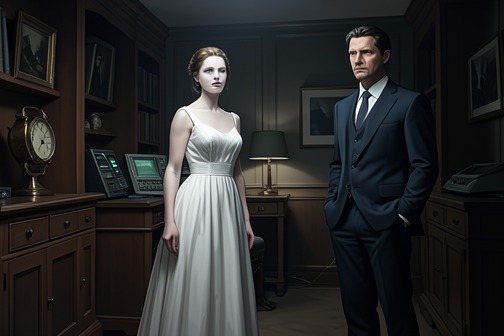
[Julia](entity:character-recall-character-julia-dd9a6077f139) and [Frank Cotton](entity:character-recall-character-frank-cotton-34bbca6bed35)’s premarital affair takes place just before Julia’s wedding to [Rory](entity:character-recall-character-rory-d9b6513298d7), Frank’s brother. Its significance lies not only in the betrayal but in the unsettled way Julia remembers it: an encounter marked by aggression that she later reshapes into a cherished memory, and a loss that helps govern her choices long afterward.
## Background and Attraction
Julia’s curiosity about Frank began before she met him. Rory had spoken of his brother as a reckless man, and the mixture of revulsion and envy in Rory’s account intensified her interest. Frank appeared in person barely a fortnight before the wedding. His gold rings and tanned, taut appearance seemed at odds with the monster Rory had described; to Julia, he was polished and charming, and she yielded to that charm within hours.
As the wedding approached, Julia found herself thinking less about her intended husband and more about Frank. The brothers shared a lilt in their voices and an easy manner, but she perceived in Frank a desperate quality she felt Rory lacked. That contrast helps explain the force of her attraction, though it does not make the affair inevitable. Julia later presented it to herself as something her instincts would have brought about eventually, even if she had resisted longer. The account records that explanation as retrospective self-justification, not as proof that she had no choice.
## The Encounter
On the day Julia understood as the day the affair would happen, [Kirsty](entity:character-recall-character-kirsty-7e9090772656) was at the house on wedding-related business. Julia left Kirsty occupied with preparations and took Frank upstairs, saying she would show him the wedding dress. In Julia’s recollection, Frank had asked to see it. She put on the veil and laughed at the incongruity of seeing herself in white; Frank lifted the veil from behind her. Her laughter did not deter him, and the encounter quickly became aggressive rather than tender. The narration describes it as joyless and coercive, while distinguishing the question of Julia’s acquiescence from the violence of the encounter. Its account therefore resists treating her later attachment as evidence that the experience was simply mutual or romantic.
The wedding lace and veil become part of the memory’s lasting imagery. Years afterward, Julia identified the first faltering of her resolve with the moment she lay on a bed of wedding lace while Frank kissed her neck. The setting ties the affair to the marriage she was about to enter: the dress and veil signify the future she was preparing for, even as she turned away from Rory toward his brother.
## Departure and Marriage
Frank disappeared the day after the encounter. Julia imagined that he had fled to Bangkok, Easter Island, or somewhere else beyond the reach of his debts; the destination remains uncertain. She mourned him despite the briefness of their affair. His abrupt departure turned the encounter into an absence, leaving Julia with a memory she could revisit but no continuing relationship with Frank.
The affair’s consequences extended into Julia and Rory’s marriage. Although the subject was never explicitly discussed, Julia wondered whether their relationship began to deteriorate when she thought of Frank while making love to Rory. This remains her suspicion rather than a confirmed explanation for the marriage’s decline. Still, the thought makes the affair more than a concealed episode: in Julia’s account, it enters the marriage as an unspoken third presence.
## Memory and Later Significance
Four years and five months after that afternoon, Julia had replayed the encounter often. Memory had softened its character: she came to treat the bruises as trophies of passion and her tears as proof of her feelings for Frank. That transformation does not erase the earlier description of the encounter. Instead, the contrast reveals how Julia’s recollection accommodates both its coercive character and her continuing desire. She treasures the memory even while the narration makes clear that its tenderness is partly a product of what she later wants it to mean.
When Julia encounters old family photographs among Rory’s belongings, her response is fury rather than regret. The photographs prompt her to recognize that she has somehow lost herself, and she locates the beginning of that loss in the affair. Later, when she discovers Frank’s presence in the [Damp room](entity:location-recall-location-damp-room-9d18eb29478f), the old memory becomes a motive for wanting him back. She recalls his forcefulness and imagines restoring him through blood, hoping that renewed access to him might also give her power over him. The affair thus reaches beyond the wedding and the marriage: it supplies the emotional history through which Julia understands her longing, her grief, and the increasingly destructive choices she makes in Frank’s name.
Event 2
Julia discovers Frank trapped in the wall
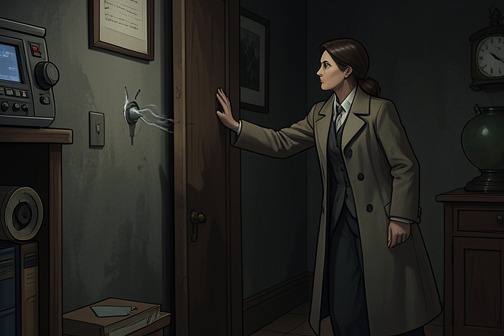
[Julia](entity:character-recall-character-julia-dd9a6077f139)’s discovery of [Frank Cotton](entity:character-recall-character-frank-cotton-34bbca6bed35) inside the wall of the [Damp room](entity:location-recall-location-damp-room-9d18eb29478f) turns a hidden presence in the house into a desperate, actionable secret. The encounter reveals that he is alive, or at least capable of communicating, and that blood can reach him through the wall; Julia’s response converts recognition and pity into a decision to provide him with more.
## The Room and the First Sign
Before she finds Frank Cotton, Julia is already withdrawing from the ordinary life of the house. While [Rory](entity:character-recall-character-rory-d9b6513298d7) entertains their guests downstairs, she retreats from their laughter and from her contempt for the company she has been enduring. She wants darkness and quiet. The Damp room, away from the gathering, seems to offer both.
On entering, Julia notices that the boards where Rory’s blood had fallen have been cleaned. The detail gives the room an unsettling recent history before anything supernatural appears: blood was there, but no trace of it remains. She closes the door behind her and stands in near-darkness. From the far side of the room comes a small sound, stops, and returns with a pattern that seems almost like a code. Its faintness makes the discovery gradual rather than immediate; Julia first has to listen, then locate the sound in the room.
She feels along the wall and finds a place markedly colder than the surrounding surface. When the scratching stops, the silence briefly leaves her disoriented. The wall then appears to change: a cold light shows through it, and its sections seem to shift and open into further concealed spaces. The scene makes the familiar interior of the house behave like a boundary with something hidden beyond it. Julia watches the wall’s apparent rearrangement, unsure what she is seeing, until movement gives the display a more definite and threatening presence.
## Frank Cotton Behind the Wall
The shifting stops, and Julia sees a human figure in the wall. She understands that it is Frank Cotton, though what she can make out is incomplete and altered. The encounter is frightening in its strangeness, but Julia’s first response is not fear. She judges the figure weaker than she is and recognizes that it is suffering; that perception brings pity, and with pity her frozen body releases its breath again.
The figure manages to speak her name. The single word identifies Julia as the person Frank Cotton is trying to reach, but it does not yet explain how he came to be there, what has happened to him, or how he might be helped. The wall closes over him again. By the time Julia has recovered enough to look, the light and the visible figure have disappeared, leaving the ordinary surface of the room in their place.
The disappearance does not undo the recognition. Julia is convinced that Frank Cotton is in the house and has been there all along, shut away from the world she inhabits but close enough to make a fragile contact. She cannot determine why he is trapped or exactly what state he is in. The gap in her knowledge matters: she has learned that he is present, but not how to reach him or whether he can be restored. When the wall opens again, he identifies himself and gives her a further clue: blood. His brief communication supplies a means of action without an explanation of its full consequences.
## Blood as Clue and Decision
Julia connects Frank Cotton’s request to the blood that had been on the Damp room floor. That blood came from Rory, and its disappearance now appears to her to have a cause: Frank Cotton has fed on it, gaining enough strength to reach out through the wall. Her conclusion is an inference rather than a complete account of what sustains him, but it changes the discovery from an isolated apparition into a process she believes she can influence.
The room’s evidence gives the inference weight. The floorboards had been cleaned, and the blood was gone; now Frank Cotton has made contact and named what he needs. Julia considers whether a larger supply might do more for him. In her mind, blood is not merely a clue to his condition but a possible route back to the person she remembers. She realizes that she has remained in love with him and has been mourning him. That recognition aligns the supernatural mystery with her private attachment: helping Frank Cotton becomes, for her, a chance to recover a lost relationship.
Julia also imagines that if she provides the nourishment he needs, he will be grateful and responsive to her. The possibility of his return is entwined with a wish to control the terms of that return, whether he proves docile or brutal. The encounter therefore does not simply restore her hope; it turns hope toward a dangerous bargain she has made with herself. She resolves to supply blood without considering the consequences for the people from whom it will come.
## From Revelation to Action
The discovery shapes Julia’s conduct after she leaves the room. She does not sleep well that night or on the nights that follow. Yet the revelation is not visible to Rory. In the days afterward Julia regains her smile, and Rory mistakes the change for happiness in their new house. He returns to redecorating with renewed energy and talks of addressing the dampness upstairs. Julia tells him there is no hurry to make the room into a bedroom. What looks to him like domestic contentment is, for her, concealment of the secret she has discovered and the plan she is forming.
She begins killing men to provide Frank Cotton with blood. In one encounter, she uses a slaughtering knife against a man who has been drinking with her; the account establishes the killing without making its physical details the focus. Afterward, the room responds: blood moves toward the wall, and the dead man’s body is drained of what could nourish Frank Cotton. The remains are left without useful sustenance. Julia watches the process and understands that her inference has produced an effect. Frank Cotton’s need is no longer an abstract possibility, and the violence she has chosen becomes a repeated means of feeding him.
The discovery’s significance lies in the chain it sets in motion. A quiet withdrawal from guests leads Julia to a sound in a wall; the brief encounter gives her a name and a demand; Rory’s vanished blood supplies her with a theory; and that theory becomes murder. The house’s familiar room conceals a presence that Julia treats as both a suffering captive and the object of her love. Her pity initiates the change, but it does not restrain it: once she believes blood can restore Frank Cotton, she makes other lives the price of that hope.
Event 3
Kirsty encounters Frank and escapes Lodovico Street
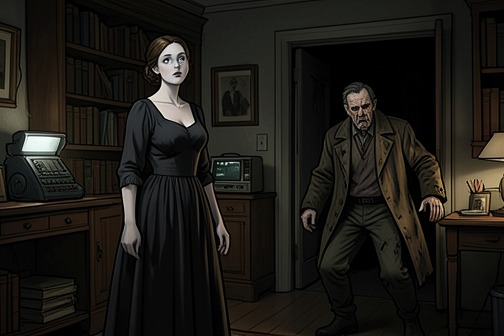
[Kirsty](entity:character-recall-character-kirsty-7e9090772656)’s encounter with Frank at the house on Lodovico Street turns her investigation of [Julia](entity:character-recall-character-julia-dd9a6077f139) into a direct confrontation with the half-restored man behind the killings. The meeting reveals Frank’s identity and growing strength, makes Kirsty a target, and sets in motion her struggle to get out of the house alive.
## Arrival and Recognition
Kirsty approaches the house uncertain whether to wait for Julia’s visitor to leave or try to enter. She nearly turns back before hearing a shout from inside. The visitor is Stanley Sykes, a middle-aged man Julia had brought from a bar. On the way, he had told Julia about his wife, Maudie, who worked as an assistant chiropodist, and their children, Rebecca and Ethan. Once inside, however, Sykes becomes troubled by their conduct, says that God sees them, and turns against Julia.
The confrontation is interrupted when a voice calls from the landing. Frank appears, and Sykes tries to flee. Julia holds him long enough for Frank to reach him. Kirsty hears the abrupt end of the disturbance and moves toward the door, but the scene she encounters is not the meeting she had expected: the bedroom is empty, and a changed, wasting Sykes staggers into view before Frank seizes him. Frank’s strength is already beyond that of an ordinary man, and his attack leaves Sykes unable to escape.
Kirsty runs, but Frank calls her by name and asks her to wait. His familiar voice makes her pause. When he asks whether she remembers him, she does not; he identifies himself as Frank, [Rory](entity:character-recall-character-rory-d9b6513298d7)’s brother. Kirsty recalls having met him only once, shortly before the wedding, and having disliked him immediately. The recognition sharpens the danger of the encounter: the figure before her is not merely Julia’s hidden accomplice, but the brother whose return from the past has brought violence into the house.
## Resistance and the Box
Frank reaches for Kirsty, and the encounter shifts from recognition to immediate danger. She understands that she cannot rely on pleading or wait for him to relent; she has to resist. Before he can press closer, she strikes at his face and manages to break free, though the effort leaves her struggling to move. She edges toward the door rather than crossing the room openly, while Frank recovers and bears down on her again.
Among the household objects scattered at her feet, Kirsty finds a plain box. She swings it at Frank as he closes in, and the blow makes him stagger, giving her a chance to head for the door. His renewed attack drives her back, but when she raises the box again, he abruptly stops. He extends his hand and asks for it, revealing that the object matters to him as more than a weapon. Kirsty refuses to give it back. When he repeats the request, she hurls the box through the window instead. Frank turns toward the broken window, and Kirsty uses that moment to reach the landing and begin her escape.
## Escape and Immediate Aftermath
Kirsty makes it down the stairs and through the front door, then crosses the brightening day outside. Among the glass shards on the path, she finds the box she had thrown through the window and takes it with her. Although Lodovico Street is deserted, she keeps running until she has put considerable distance between herself and Frank.
On an unfamiliar street, someone asks whether she needs help. The ordinary kindness is enough to overwhelm her exhausted effort to answer coherently, and she loses consciousness. Her escape therefore ends not in safety she can manage for herself, but in collapse beyond the house, carrying the object that had briefly interrupted Frank’s pursuit.
## From Escape to Revenge
Kirsty’s flight from Lodovico Street does not restore her to ordinary safety. In a later reflection, she understands herself to have crossed the same threshold Rory’s brother had opened and to be walking alongside the [Cenobites](entity:character-recall-character-cenobites-95f5e84adeb2). She intends to find Frank and make him experience the powerlessness he inflicted on her. The encounter thus becomes more than an escape from immediate danger: it marks the beginning of a reversal in which Kirsty, no longer only fleeing Frank, sets out to confront him. Her response remains shaped by the violence she suffered, and the prospect of revenge alters the moral direction of her pursuit.
Event 4
Kirsty opens the Lemarchand Configuration in the hospital and bargains with the Cenobites
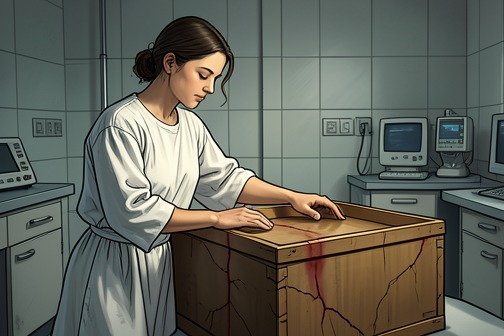
[Kirsty](entity:character-recall-character-kirsty-7e9090772656)’s hospital encounter with the [Lemarchand’s Configuration](entity:object-recall-object-lemarchand-s-configura-5e415494fa83) turns an accidental opening into a desperate negotiation with the [Cenobites](entity:character-recall-character-cenobites-95f5e84adeb2). She begins without knowing what the puzzle does or why it has come into her possession; by the end, she has learned that [Frank Cotton](entity:character-recall-character-frank-cotton-34bbca6bed35) is alive and has offered to bring him to the beings who once punished him. The episode shifts the box from an enigmatic object into a means of crossing into the Cenobites’ reach—and makes knowledge of Frank the narrow basis on which Kirsty can bargain.
## The hospital and the box
The hospital room’s blank white walls leave Kirsty with little to occupy her attention. In that setting, the box becomes an object to examine: she remembers it, notices that it is heavier than expected, and searches its surfaces for a lid, keyhole, or hinge. Finding none, she reasons that it cannot be solid and must have some way to open. Her initial attempts to tap, shake, pull, and press it produce no result.
A closer look, under the bedside lamp, reveals minute cracks along the sides. Blood residue in the seams traces where the puzzle’s parts meet. Those marks give Kirsty a rough map of its construction; instead of testing every possible movement across all six sides, she can narrow the possibilities and try particular combinations. Her progress depends on attentive handling rather than on an instruction or key.
When one compartment finally slides free, the box reveals polished inner surfaces and an elaborate mechanism. Music begins, and each further section offers another challenge, adding to the tune as Kirsty works. The puzzle is at once material and suggestive: its carefully joined parts can be manipulated, but their movement also seems to lead beyond an ordinary object. Kirsty is drawing out the fourth section when the bell interrupts her.
## The summons
The bell’s tolling brings a change in the room. Kirsty looks toward the window and sees a windy night, leaves moving across the hospital lawn and moths gathered around the light. She realizes that the sound is behind her rather than outside. The bedside bulb then falters; as she reaches for the pieces, it goes out. A faintly luminous figure appears at the end of the bed, its scarred appearance offering no ordinary explanation for its presence.
The visitor identifies the box as the Lemarchand’s Configuration and explains that it can break the surface of the real and notify the Cenobites. As the figure speaks, the pieces rise above Kirsty’s palm and assemble themselves, turning until nearly all the sections have closed. Kirsty sees distorted faces within the polished interior. The box’s reassembly makes the crossing visible as well as explained: what had required her patient hand now moves without her, under a force connected to the visitor.
The Cenobite tells Kirsty that she opened the Configuration in ignorance. The visitor also says that the [Schism](entity:concept-recall-concept-schism-a8bf98c5068c) cannot be sealed until the Cenobites take what belongs to them, and insists that Kirsty must accompany it. Her lack of knowledge does not cancel the consequences of opening the box. The event therefore reverses the apparent control of the puzzle: Kirsty has successfully solved its mechanism, but solving it has placed her in a situation she cannot simply undo.
## Frank becomes the basis of a bargain
Rather than accept the visitor’s demand without question, Kirsty asks whether it knows where the box came from. The Cenobite is initially uninterested in its provenance, so she names Frank Cotton. Its recognition of Frank confirms that he has a history with the Cenobites. Kirsty then asks whether he solved the box too, and learns that he sought pleasure from them, received what he had sought, and recoiled from the result. The visitor further confirms that Frank is alive.
That disclosure connects Kirsty’s hospital encounter with Frank’s earlier opening of the same kind of puzzle. Before summoning the Cenobites, Frank had prepared a room with offerings and followed the invocation ritual advised by [Kircher](entity:character-recall-character-kircher-d2c529001e52). When asked what he wanted, he asked for pleasure. The beings who arrived subjected him to an overwhelming experience that he could not control; it ended abruptly, after which a fourth Cenobite appeared. The comparison makes the hospital conversation more than a discovery about Frank’s whereabouts: Kirsty learns that the person she hopes to find is already bound to the beings now claiming her.
Kirsty turns that knowledge into an offer. She proposes to take the Cenobite to Frank, and the visitor sets terms: she must deliver him alive and make him confess himself. It offers no certainty of safety, only the possibility that it may refrain from tearing her soul apart. The bargain is therefore sharply unequal. Kirsty has identified something the Cenobites want, but they retain the power to define what counts as fulfillment and what may happen to her afterward.
## Consequences and significance
The encounter leaves Kirsty with a conditional route out of immediate captivity, not a resolution. Her promise depends on finding Frank and delivering him alive, while the required confession adds a further condition beyond simply locating him. The scene ends its immediate negotiation at the point where she has gained a purpose and the Cenobites have named their price; whether the terms can be met remains open.
The episode also establishes an important contrast between solving the box and understanding it. Frank approached the Configuration deliberately, prepared a ritual space, and sought a specific experience; Kirsty discovers its workings through close observation, without intending to summon anyone. Yet the same mechanism brings both within the Cenobites’ power. For Kirsty, the box’s blood-marked seams first serve as practical clues, and its music accompanies her success; the bell then announces that technical success has opened a danger she did not know how to anticipate. Her eventual leverage comes not from mastering the box, but from learning a fact about Frank that can be exchanged for a conditional chance to act.
Event 5
Frank kills Rory and takes his skin
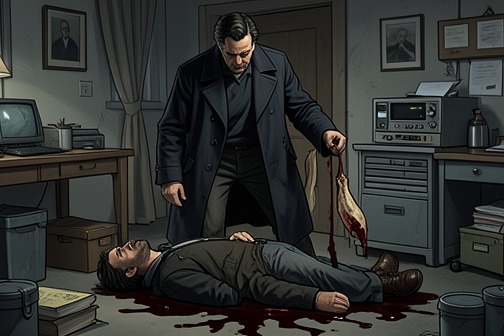
[Frank kills Rory and takes his skin](entity:event-recall-event-frank-rory-6e8196038cfb) in a turning point that transforms his escape from concealment into an assault on the identity of his own brother. The act grows out of [Julia](entity:character-recall-character-julia-dd9a6077f139)'s discovery that Frank remains trapped in the [Damp room](entity:location-recall-location-damp-room-9d18eb29478f) and can be strengthened by blood.
## Background and the Blood Supply
Julia finds evidence that Frank is still present in the house when a human figure briefly appears within the wall. Its condition prevents it from explaining itself fully, but it manages to identify itself as Frank and name blood as what it needs. Julia connects this request with [Rory](entity:character-recall-character-rory-d9b6513298d7)'s blood, which had disappeared from the floor, and concludes that the spill had given Frank enough strength to make contact. She resolves to provide him with more.
Julia's first killings establish the grim method by which she feeds Frank. She attacks a visitor with a knife, then watches as the blood on the floor moves toward the wall and the body is drained of anything that might nourish Frank. Later, she kills another man in the room; Frank's visible pleasure confirms that the violence serves him. This pattern makes Julia an active participant in Frank's return, not merely a witness to it. Rory, Frank's brother and Julia's husband, will become the victim through whom Frank's dependence on blood develops into a theft of both appearance and identity.
## Death and Assumption of Rory's Identity
The discovery of Rory’s body reveals the cost of Frank’s return. Upstairs, [Kirsty](entity:character-recall-character-kirsty-7e9090772656) finds Rory dead in Frank’s room, his body left beneath the bandaging and stripped of its skin. In the hallway, however, a figure appears to be the injured Rory, and Julia urges Kirsty to leave the matter to them. The two incompatible sights force Kirsty to recognize that the man before her is not Rory: Frank has taken his brother’s appearance and is using it to pass as him.
In the dark room, Kirsty stumbles over Rory’s corpse while Frank pursues her. Her grief sharpens when she understands that Frank has appropriated not only Rory’s skin but also his name. To Kirsty, a name holds the memories and relationships attached to a person; Frank’s imitation therefore compounds the killing by trying to erase the distinction between the brothers. She insists inwardly on Rory’s death and refuses to accept Frank’s performance as a continuation of him.
Frank’s disguise briefly puts Kirsty face to face with the person she knows as Rory, even as she recognizes the truth. He confirms his identity as Frank, and Kirsty’s recognition exposes the deception. Rory’s death thus enables Frank to move through the house under a familiar identity, but it also gives Kirsty the decisive evidence she needs to confront him as his brother’s murderer and impersonator.
## Exposure and Immediate Consequences
The confrontation shifts beyond Kirsty and Frank when the [Cenobites](entity:character-recall-character-cenobites-95f5e84adeb2) appear. Frank recognizes Kirsty’s role in bringing them there, and her nod confirms that she has exposed him; one of the Cenobites then tells her that what follows is no longer her business. The intervention places Frank’s assumed identity under a force that recognizes him regardless of the appearance he has taken. Rory’s stolen skin may have let Frank occupy a familiar place in the household, but it cannot protect him once Kirsty makes the truth known.
## The Disguise’s Failure
Once Kirsty recognizes Frank, the borrowed appearance can no longer secure his control of the encounter. He tries to kill her, but she evades the blow; when the Cenobites arrive, Frank understands that she has brought them and accuses her. The moment reverses the advantage Rory’s stolen skin had given him: the disguise has helped Frank pass as his brother, but Kirsty’s recognition exposes him, and the Cenobites take charge of what happens next.
Event 6
The final confrontation on Lodovico Street
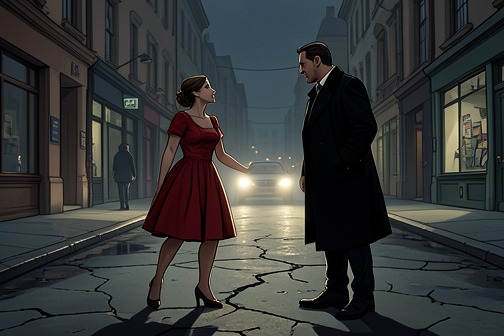
[The final confrontation on Lodovico Street](entity:event-recall-event-lodovico-street-b50e39ee1a27) brings [Kirsty](entity:character-recall-character-kirsty-7e9090772656) back to the house to challenge Frank and determine [Julia](entity:character-recall-character-julia-dd9a6077f139)’s part in what has happened. Its first turn is a contest over knowledge: Kirsty says she witnessed the events, while Frank claims that he and Julia acted together against [Rory](entity:character-recall-character-rory-d9b6513298d7).
## Causes and Background
Kirsty approaches the house without a settled plan. She looks for the Cenobite but sees no sign of him, and she cannot know whether Julia will be there or how deeply Julia is involved with Frank. Kirsty considers that Julia might have acted out of fear, but finds it impossible to regard her as an innocent bystander. The unanswered questions lead her to the house on Lodovico Street, where she rings the bell and waits.
When Kirsty faces Julia, she blurts out that she was there that afternoon and saw what happened. The statement makes her witness to the house’s hidden violence, not merely an outsider asking for an explanation. Frank counters by describing himself and Julia as having destroyed Rory together. He says Rory trusted him because they were brothers, then rejects that trust as no guarantee of loyalty. His account exposes Julia’s participation and makes the confrontation a reckoning over both Rory’s fate and the alliances formed within the house.
## Recognition and Escalation
Kirsty’s uncertainty breaks when she connects Frank to what remains of Rory upstairs: Rory’s body lies abandoned in Frank’s discarded bandages, while Frank has taken on his brother’s appearance. The disguise turns the brothers’ relationship into a literal means of concealment, but Kirsty recognizes the substitution and understands that the man before her is Frank.
She reaches for him, and her nails catch his cheek; the recently attached skin shifts, exposing the deception. At that instant, the bells that had overwhelmed Kirsty’s thoughts become audible throughout the house and the surrounding world. The change marks a decisive turn: Frank’s assumed identity is no longer secure, and the [Cenobites](entity:character-recall-character-cenobites-95f5e84adeb2)’ presence presses into the confrontation.
Frank draws a bloodied knife and points it at Kirsty. As she reaches the foot of the stairs, Julia seizes her and holds her in place, leaving her exposed to Frank’s attack. The encounter’s conflict is now physical as well as evidentiary: Kirsty has identified Frank, but Julia’s intervention gives him the opportunity to silence her.
## Reclamation and Aftermath
Frank turns from Kirsty to Julia, whose intervention had helped expose Kirsty to his attack. When Julia calls for help, he approaches her; she reaches toward him as if expecting tenderness, but he instead consumes her. The reversal ends their alliance on Frank’s terms: Julia had helped him conceal and sustain his return, yet she is not spared once she is vulnerable.
The Cenobites then reclaim Frank. His admission of his identity confirms what Kirsty has already recognized, and they restrain him and draw him away. As they take him, the body he had reconstructed comes undone. Kirsty is told to leave; she accepts the opening, escaping while Frank screams behind her and the house fills with bells and other uncanny sounds.
On her way out, Kirsty discovers Julia again in the dining room, beneath the folds of a dress. Julia’s head speaks despite her condition, and a light grows beneath the bridal veil. Rather than wait for the spectacle to intensify, Kirsty backs into the hall and runs for the front door as the ceiling begins to give way. Her escape is not a return to ordinary safety: the house is collapsing around her, while spectral birds crowd the air and wolves howl within its walls.
At the threshold, Kirsty collides with something and finds Lemarchand’s box in her hand. Its surfaces have been resealed and polished, with no visible clue to its solution. Kirsty understands that another person may someday discover and open it, and that she has apparently become its keeper. The confrontation thus ends with Frank taken back by the Cenobites, Julia dead, and Kirsty carrying the very object that first opened the way to the other world.
## The House as a Hidden Threshold
Before the confrontation, the house has already turned concealment into part of its architecture. When Julia enters the [Damp room](entity:location-recall-location-damp-room-9d18eb29478f), the boards where Rory’s blood fell have been cleaned, the room beyond the landing light is dark, and the door locks behind her. The wall’s strange movement gives way to a substantial flicker; Julia recognizes that Frank has been in the house all along, hidden within it. The final encounter brings that long concealment into the open: what had seemed an empty room and a familiar home prove to be barriers around Frank’s return.
That reversal gives the confrontation a spatial as well as familial force. The [Lemarchand’s Configuration](entity:object-recall-object-lemarchand-s-configura-5e415494fa83) had opened a passage to a world beyond the room in which Frank first used it; now the house itself becomes the site where the Cenobites reclaim him and Kirsty escapes with the box. The movement from an invisible doorway to the exposed deception in Frank’s borrowed appearance binds the plot’s supernatural crossing to its intimate betrayal, making the house both hiding place and passage out.